

The Centre for International Cooperation (CIS) is of great value to some faculties because it secures grants and has a vast network in countries where they do not have one themselves. ‘If you close the CIS now, you’ll never get that back,’ says development economist Lia van Wesenbeeck.
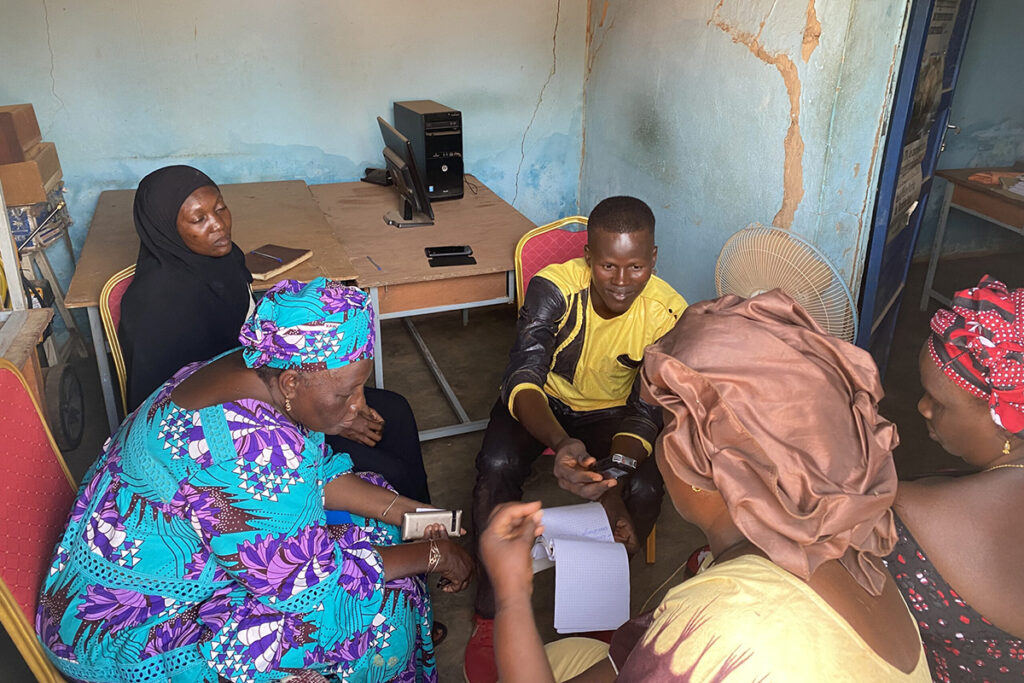
Seventy years ago, the predecessor of the CIS began as an organisation collaborating with white, Christian universities in South Africa. It supported organisations that sent missionaries to what was then known as the Third World. Missionary work subsequently evolved into teaching, then into development work, and later still, the activities transformed into equal partnerships with partners in emerging nations. It resulted in collaborations that benefited both parties, such as ICT projects in West Africa, where the local population gained easy access to information about the prices of their crops and IT specialists learnt how to build systems that are robust in all kinds of circumstances.
Over the years, the CIS has built up a vast network in these emerging countries, which is a major advantage when applying for grants with partners from these countries, in collaborations with universities, and in awarding PhD places to people from non-Western countries.
Benefits not taken into account
Now the Executive Board plans to disband the CIS. The budget deficit in recent years has averaged around 250,000 euros, against a budget of 1.3 million and a workforce of 10.5 FTE. But CIS staff and others outside the centre believe the way the figures are viewed is unfair: CIS staff must recoup all their costs, which includes full salaries and all overheads, by securing grants and subsidies.
‘Meanwhile, CIS also generates income for faculties, which is currently not included in our revenue,’ says CIS staff member Anna Bon. “If a PhD student from Africa completes their PhD at the VU through our network, the VU receives 80,000 euros for this, a significant portion of which goes to the faculty. That’s fine in itself, but without our network, that PhD student probably wouldn’t have been there.”
Development economist Lia van Wesenbeeck, who has worked closely with CIS over the years, is also critical of this method of calculation: “Earning your entire salary and all overheads externally is a lot,” she says, “it suggests that this group contributes nothing else to the VU, and that is absolutely not true.” Van Wesenbeeck refers to the framework contract with the Ministry of Economic Affairs and Climate in which the Amsterdam Centre for World Food Studies and the CIS collaborate in a consortium with the accountancy firm PriceWaterhouseCoopers. “We were awarded that framework contract partly because of the CIS’s excellent network,” she explains, “it means we are one of the designated parties for the Ministry’s projects in our area of expertise.”
Van Wesenbeeck also finds the VU’s substantive choices inconsistent: “Social engagement is one of the VU’s key priorities, and this is rarely more evident than in the work carried out by CIS.”
Local languages and AI
The strength – and perhaps also the weakness – of CIS is that the institute always collaborates with various parties. CIS asks faculties if they wish to participate in projects, then applies for grants and involves local partners. As with the Web for Regreening in Africa project, for example, in which VU computer scientists worked for years with partners from African countries to develop an information system for farmers. The ultimate goal was to green barren areas, and information technology was the means to encourage farmers to plant trees for purposes other than timber production: shea butter, nuts or mangoes, for example. If farmers were aware of fluctuations in the prices of these products, they would be better able to choose the right moment to sell and thus run less risk.
Computer scientist Victor de Boer worked on the project with his students. “Those farmers don’t have smartphones, so we had to build a system that was robust and could run on text messages. And in doing so, we had to take into account the users’ specific circumstances – for example, that a significant proportion are illiterate. These are important things that are useful to a computer scientist anywhere: people in the Zuidas business district have their own specific circumstances too, and if you can build a stable system in Africa, you can do so anywhere.”
De Boer also supervised the PhD research of Francis Saa Dittoh, who recently completed a PhD thesis entitled From Radio to AI, on the use of information technology in an African context. “One fascinating question, for example, is how AI can be used for translations into the local languages spoken by these farmers,” says De Boer. “Knowledge of the local context proves to be essential here, rather than merely embellishing an abstract problem.”
A terrible shame
Over the past ten years, the CIS has contributed to the funding of 65 PhD places across various VU faculties. The CIS has also assisted with applications for 700,000 euros in Erasmus+ grants (for student and PhD candidate exchanges with developing countries). The project portfolio to which the CIS has contributed amounted to 40 million euros over the past ten years. The CIS raised around 14 million euros in external funding, of which 6 million directly benefited the faculties.
‘You’re throwing away a great deal of added value for the VU here, even if you look at it purely from a financial perspective’
“Everyone in higher education knows that cuts have to be made,” says Van Wesenbeeck, who is vice-dean of education at the School of Business and Economics, “but here you are throwing away a great deal of added value for the VU, even if you look at it purely from a financial perspective.”
Van Wesenbeeck believes this is particularly unwise at this time: “International relations are changing. America may well become less important to us in the future, whilst the economies of some African and Asian countries are rising rapidly: Nigeria, Ethiopia and Ghana are growing fast. Some African universities are reaching international standards. We have a Kenyan PhD student who has been fully involved in our group from the very start. The VU has unique contacts in these countries; there is a long-standing relationship of trust: we were there even when things weren’t going so well. To throw that away now would be a real shame.”