
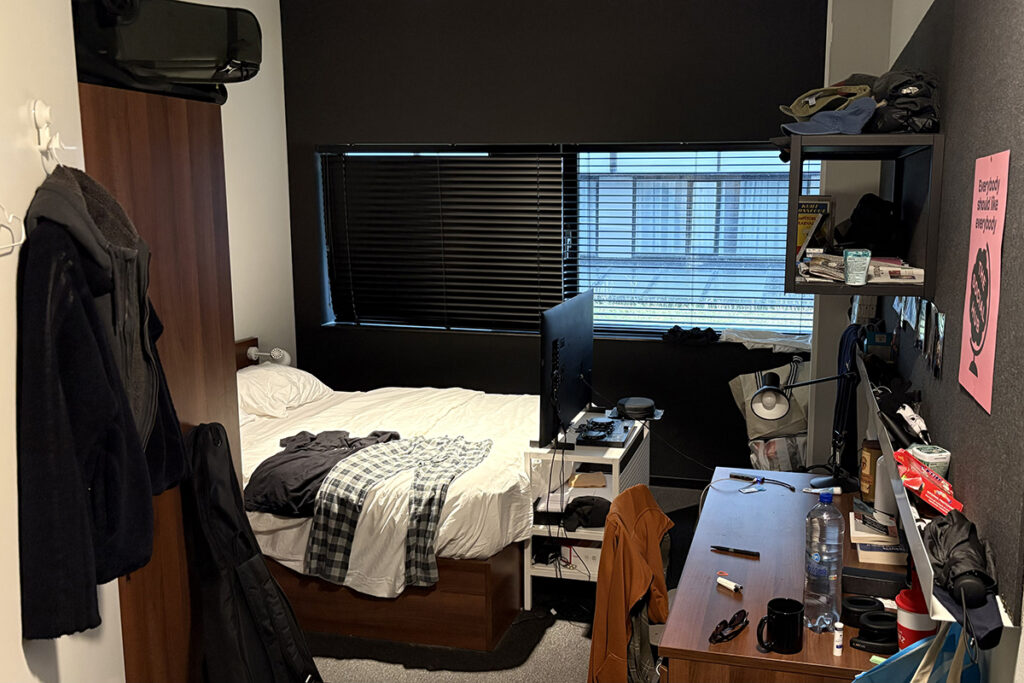

“Institutions like this shouldn’t exist.” As he makes coffee among unwashed glasses, empty beer bottles and plastic wrappers in a gloomy kitchen of The Social Hub, master’s student Baran Luis Pasaoglu reflects on the hotel he’s been staying in these last months. You can tell eleven other students use the space. A cupboard door has come off its hinges, and a long board that was once fitted between the cabinets and the floor lies flat at his feet.
Pasaoglu moved into one of the ‘extended stay’ rooms at the hotel’s Wibautstraat location last September to start his American Studies master’s at the University of Amsterdam (UvA). It costs him around 2,000 euros a month and is far from what he had hoped for when choosing to study in Amsterdam after finishing his bachelor’s in Turkey. His housing search got delayed because he was waiting for a decision from other universities he applied to. He knew rent wouldn’t be cheap because of the housing crisis, and yet he still hoped to find a studio for under 1,500 euros. He started looking in July, and after a week of little success, he was forced to lower his expectations.
He had heard about The Social Hub from a friend and was lucky enough to instantly find an available room on the hotel’s website. Although the hotel does offer rooms cheaper than his, all of those were already taken. Still, he was glad for the search to be over. “It was really a relief”, he says.
Pasaoglu’s first impression of his room was that it was small. But he wasn’t one to complain. He says he lived in smaller spaces before, and after seeing other rooms on his floor he was glad he didn’t end up with a cheaper option, which he says would be too small, even for him.
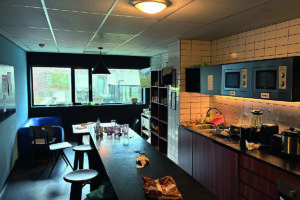 He became friends with students he shared the kitchen with. Most of them ended up at the hotel in similar circumstances to his. “I think no one wanted to be here in the first place”, he says, adding that some of them are still looking for housing alternatives now.
Little flexibility
Student hotels like The Social Hub have been a subject of controversy for the past couple of years. De Landelijke Studentenvakbond (Dutch Student Union) advises students not to choose The Social Hub because of its “exorbitant prices” and limited tenancy rights compared to regular student housing.
In the meantime, the housing crisis in Amsterdam deepens every year, as construction of new complexes struggles to catch up with private landlords selling off their student housing stock. This means that incoming students often go for any accommodation they can find, including student hotels. Despite being hotels, the establishments offer little flexibility when it comes to ending the contract prematurely, and while their amenities are enjoyable, it seems like most students wouldn’t choose them if they had more options.
Last chance
“I’m just gonna take whatever”, Briana Cotârlan thought to herself in July 2023, a month before she was set to move out of Romania and begin her Computer Science degree at VU. She was waiting for a website to open that listed accommodations reserved for the university’s incoming international students.
Because she didn’t pay VU’s housing fee in time, she couldn’t take part in earlier opportunities to book a room. Stories of people who failed to find housing and gave up their studies in the Netherlands because of it had been haunting Cotârlan for months. Now, it was her last chance to get a room through the university’s housing programme – if she didn’t get it, she considered her odds of finding a place grim.
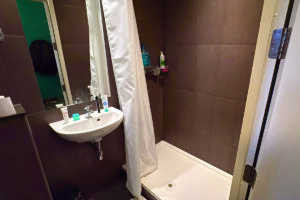 When the housing platform went online, the website crashed. For five nerve-racking minutes, Cotârlan couldn’t log in. When she finally did, only a couple of rooms were left. One of them caught her eye – for 1,087 euros a month, she would get a hotel room with access to a shared kitchen.
It was at The Social Hub in Amsterdam West, a student hotel she had heard of before. This late into the housing process, the other available rooms were just as expensive as the hotel. It was never her first choice, but she liked the fact it had a reception and security. So she decided to do it.
Unwanted guests
Cotârlan didn’t like the high price of the accommodation but started missing some of the benefits that came with it when she moved out a year later. Being used to monthly room cleaning service, she admits it was a “reality check” when maintenance became her own responsibility.
She appreciated the sense of safety the hotel’s security had provided, and the reception staff, ready to help day and night. The discounts she got at a café on the hotel’s ground floor, the access to a gym at no extra cost, rental bikes free to use – it all sweetened the deal.
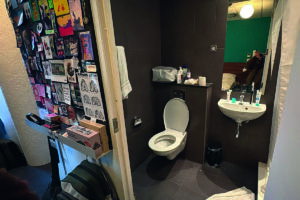
Similarly to Pasaoglu, she had no choice but to choose the more expensive room. But upon seeing other people’s rooms, which can get as small as 14 square metres, she was happy with where she was.
He witnessed a rat helping itself to a bowl of cookies on the reception counter
Pasaoglu had access to the same amenities as Cotârlan did, which he does appreciate. But he doesn’t think they justify how high the rent is, especially considering the hotel’s shortcomings. The kitchen needs fixing, which the hotel ignores, despite his requests. The internet is slow. Rats visit the lobby and common study area – he witnessed one helping itself to a bowl of cookies on the reception counter. It all makes the price hard to accept for him.
Cheaper exceptions
Student hotels can, however, be affordable, as proven by Hotel Casa, which currently charges 605 euros a month for its long-stay student rooms. Annejet Vreeburg, a Journalism master’s student at VU who lived there for over a year starting in 2020, says that period was a great start to living on her own. She chose it over regular student housing, taking advantage of the Covid pandemic shortening the hotel’s waitlist. Nowadays, it takes two years to get a room in the same hotel.
 What also shows that the hotel is a reasonable choice is that Vreeburg remembers around half of the hotel’s student residents to be Dutch. Students who lived in the Netherlands before going to university tend to end up with better housing than internationals as they have more insight into the market. At The Social Hub, both Pasaoglu and Cotârlan say they encountered almost no Dutch students.
Fleeing the hotel
It seems like signing a long-term contract with a student hotel does not come with much freedom. That’s something Hania Frej, a second-year European Studies student at UvA, learned this last year when staying at Hotel Jansen, which also offers long-stay options for students. After a month in a hotel-sized room, which she paid 1700 euros for, she was excited to hear that she could move into an apartment two months earlier than expected. Then she learned that leaving the hotel before the end of her contract would cost her 400 euros, which she says is different from what the hotel had told her when she asked about this upon arrival. According to her, she was told there would be no such fee.
Pasaoglu faced similar issues. His plan was to move out in January, but because of his one-year contract, he had to find a person to take over his room if he wanted to end the contract early. He didn’t find anyone, which was not surprising to him. “I get why most people don’t want to pay 2,000 euros for a room”, he says. He now has to stay at The Social Hub until the end of the contract.
What cheers him up is that soon he is flying out of Amsterdam, leaving the hotel room behind for a couple of nights. “I can’t wait”, he says. “I’m counting the days.”