
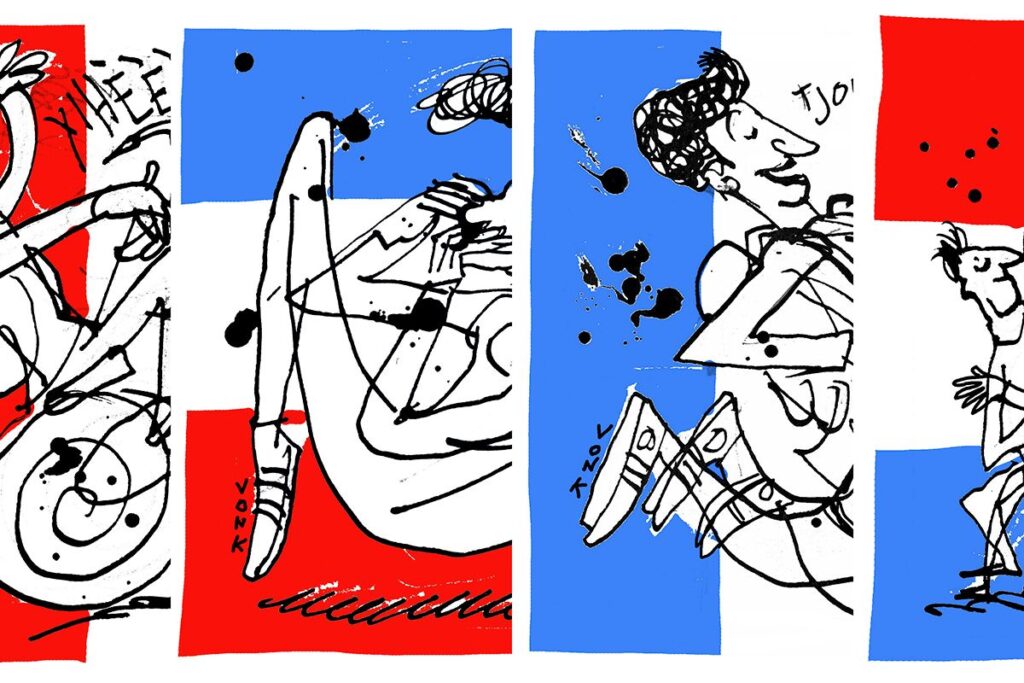
9 AM: Embrace the 6
One of the lessons you’re bound to learn from studying in the Netherlands is that excellence is overrated. In many cultures across the world, students are raised to strive for perfect grades and are considered to have failed if they drop any lower than that. In the Netherlands, you’ll find students celebrating a 6 out of 10, while some teachers never even give out a perfect 10.
“We say that the highest grade for a student is an 8, a 9 is for the professor, while a 10 is for God”, the project manager of the International Office once told Ad Valvas. So if angry Dutchies tell you to integrate, tell them that you are doing so the Dutch way. By waiting until the last moment, cramming everything in one day and barely passing. This is also known as the ‘zesjescultuur’. By letting go of your conceptions of perfection, you’ve already made a valuable step towards Dutchhood.
“I have learned to seek my happiness by limiting my desires, rather than in attempting to satisfy them” – John Stuart Mill.
11 AM: Get some wheels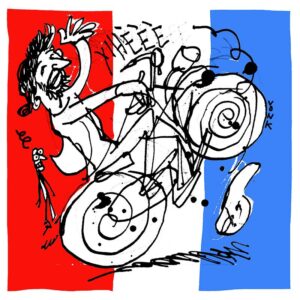
Being new to the country, it’s understandable you’d gravitate towards using public transport in your daily life, and that may be fine if like many Dutch students you qualify for free public transportation. But chances are, you do have to pay for it. Since you’re likely already overpaying on rent, cycling is often the best way to save some dough.
But most of all, experiencing the cycling culture first-hand will help you understand the Dutch way of living. Without getting on a bike, you’re likely to fear cyclists as they keep barreling towards you at full speed each time you place as much as a single toe on a cycling lane. To integrate, you must experience the cyclist’s perspective.
Getting a bike is fairly easy and it may be best to buy from international students on their way out. Otherwise, there’s always Marktplaats or Facebook Marketplace. If you haven’t already arranged a bike, there are also various rental options like the OV-fiets (the public transport’s bike) and Donkey Republic. Be careful when a stranger offers you a cheap bike on the street; they’re often stolen. Buying one while you could reasonably know it’s stolen, is illegal.
For your first cycling exercise, stay out of the busy city centre, find your balance, get used to the brakes and madly ring your bell at the first person you see trying to cross the street without using a pedestrian crossing. If you feel a sense of power and dominance, your mission is complete.
“Life is like riding a bicycle. To keep your balance, you must keep moving.” – Albert Einstein.
1 PM: Eat a sandwich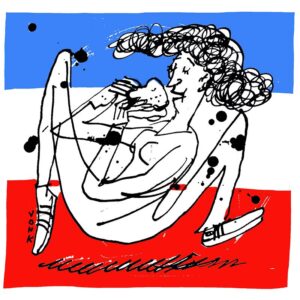
You’ve probably already gone to FEBO or another snack bar at this point and you’ve hopefully discovered that there’s plenty of good restaurants to be found (especially those serving food from former Dutch colonies). The bigger food hurdle for internationals tends to be lunch.
Depending on your culture, it may be sacrilege to eat a cold dish for lunch, let alone a sandwich. And we’re not talking about a fancy baguette with crisp lettuce, a wide selection of vegetables and cream cheese. To get a taste of true Dutch efficiency (or laziness), you will have to make do with just three ingredients: sliced bread, butter and cheese, also known as the ‘boterham met kaas’.
To make it a bit easier for you, keep in mind that you can find excellent sliced bread at any bakery. Even the supermarkets tend to have decent bread, so long as you get a fresh loaf instead of the fluffy and flavourless factory bread. Likewise, you can stick your favourite cheese in there. In the future, you can add more toppings or grill your bread to make a classic ‘tosti’. But for at least one day, you should try to appreciate the simplicity of this Dutch staple.
“Worthless people live only to eat and drink; people of worth eat and drink only to live.” – Socrates.
2 PM: Learn some Dutch
You can eat sandwiches and ride bikes all you want; integration is also about making a connection. It’s important to at least learn some basic polite words and phrases to say hello, please and thank you. But to show that you are sincerely interested in Dutch culture and trying to adjust, you’ll have to go a bit further than that. Granted, we’re still striving for the bare minimum of integration that can be achieved within 24 hours, so we’re ruling out Dutch classes and language apps.
Instead, you’ll be learning typical Dutch expressions that are never uttered by tourists. By mastering just a few authentic words and phrases (please refer to the dictionary below), you can pass off as someone who has been living the life of a local, even if you only arrived last week.
Instead of trying to learn them all, look for three expressions that you’re likely to use and memorise them. Since phonetic spelling may not accurately convey Dutch pronunciation, it’s best to check with a Dutch speaker or Google Translate.
“Language is, like, really my thing.” – Dutch writer Paulien Cornelisse.
Dutch expressions
Gadverdamme (guhd-ver-dumb-uh)
This is a common expression of disgust. There are also ‘gedverdemme’ and ‘gadverdarrie’, which mean the same. You will also commonly hear ‘godverdomme’, which translates to goddamnit and expresses anger or frustration. This last one may not be appreciated by religious people. The words can also be shortened: gadver, gedver, godver.
Helaas pindakaas (hayl-ahs pin-da-kahs)
‘Too bad’, or literally translated, ‘unfortunately peanut butter’. It’s a playful way of telling someone to deal with it.
Kantje boord (cunt-yeh bored)
A near miss or close call. When you get a 5.5 for an exam, that was kantje boord!
Lekker weertje, hè? (lek-ker weir-tyuh heh?)
A typical phrase to say the weather is good, which can also be used sarcastically. ‘Lekker’ means tasty, but can also be used for anything nice, pleasant or sexy. ‘Weer’ is the weather, while ‘tje’, ‘je’ or ‘pje’ get added to words to make them sound smaller or cuter. The constant ‘heh?’ that Dutch people add to the end of their sentences means ‘right?’
Mierenneuker (me-run-new-ker)
This literally means ant-fucker. It’s a derogatory term for people who nitpick.
OV (oh-vay)
The widely used abbreviation for public transportation (openbaar vervoer), mainly referring to buses, trams, metros, and trains.
Patat met (pah-taht met)
This means ‘French fries with’, which is commonly understood by locals to imply that you want mayonnaise with them. Other sauces will be specified, such as patat met ketchup. In more southern regions of the Netherlands and Belgium, fries are more commonly called friet.
Stufi (stew-fee)
The Dutch abbreviation of studiefinanciering, the governmental financial support which many Dutch students get.
Tjonge jonge (tyoung-uh young-uh)
This is a common expression to profess your surprise, amazement, or annoyance with something, just like ‘wow’. Sometimes it’s pronounced with an s instead of a t: sjonge jonge. The expression can be shortened or lengthened to decrease or increase its weight. Just tjonge is less powerful, while tjonge jonge jonge jonge is far more expressive.
Zesjescultuur (zes-yes cul-tuur)
A culture of sixes, meaning a culture in which the people are pleased with the bare minimum. The phrase is often – but not always – used to criticize the phenomenon.
5 PM: Make a friend 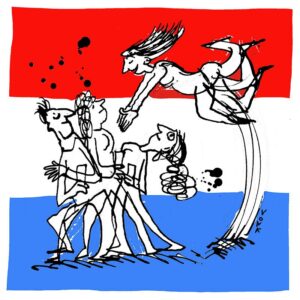
The best way to integrate into Dutch society is also the hardest: befriending the locals. Looking among your fellow students is the most obvious choice. However, a crucial part of understanding Dutch friendships is that many Dutch people are fine with the group of friends that they met at the hospital mere moments after they were born. It’s even harder to get your foot in the door if you don’t speak Dutch, despite most Dutch people speaking near-perfect English.
You’re likely to find plenty of Dutch students willing to party and go clubbing. But celebrating a birthday, going for a hike or exploring a city together may be off-limits if you haven’t penetrated their inner circle. Therefore, it’s best to focus your efforts on those who seem comfortable speaking English and show genuine interest in internationals.
Fortunately, there’s a constant stream of VU-related events where you can snag yourself a Dutch bff. Go painting or bowling at Life is Better in 3D, play some (non-American) football at the Student Football League, play (video)games with the Boosted Gryffins, philosophize at NEWConnective, join sustainability initiatives at the Green Office, find your kindred spirits at VU Pride or check out the many other specialized and general student associations.
Should you want to integrate more, your Dutch friend will surely help you further along the way. But if you’ve passed all five objectives, we wholeheartedly credit you with being sorta, kinda Dutch, maybe.
“Whoever argues with Dutchies should see to it that in the process, he does not become a Dutchie. And if you gaze long enough into the Netherlands, the Netherlands will gaze back into you.” – Friedrich Nietzsche, sort of.