
If you arrive fresh from abroad, what are the most important things you need to know? “We always start with the practical matters: a bank account, health insurance, housing, a general practitioner and registration at the municipality. If those things aren’t in order, it’s hard to build a life here. That’s why we encourage students to sort those things out as soon as possible.”
How does the International Office help with that? “In several ways: we have housing available that students can register for on a first-come, first-served basis; we’ve made arrangements with the University General Practice (at VUmc) where students can sign up. During our introduction week, we hold sessions where we explain all of these practical things.”
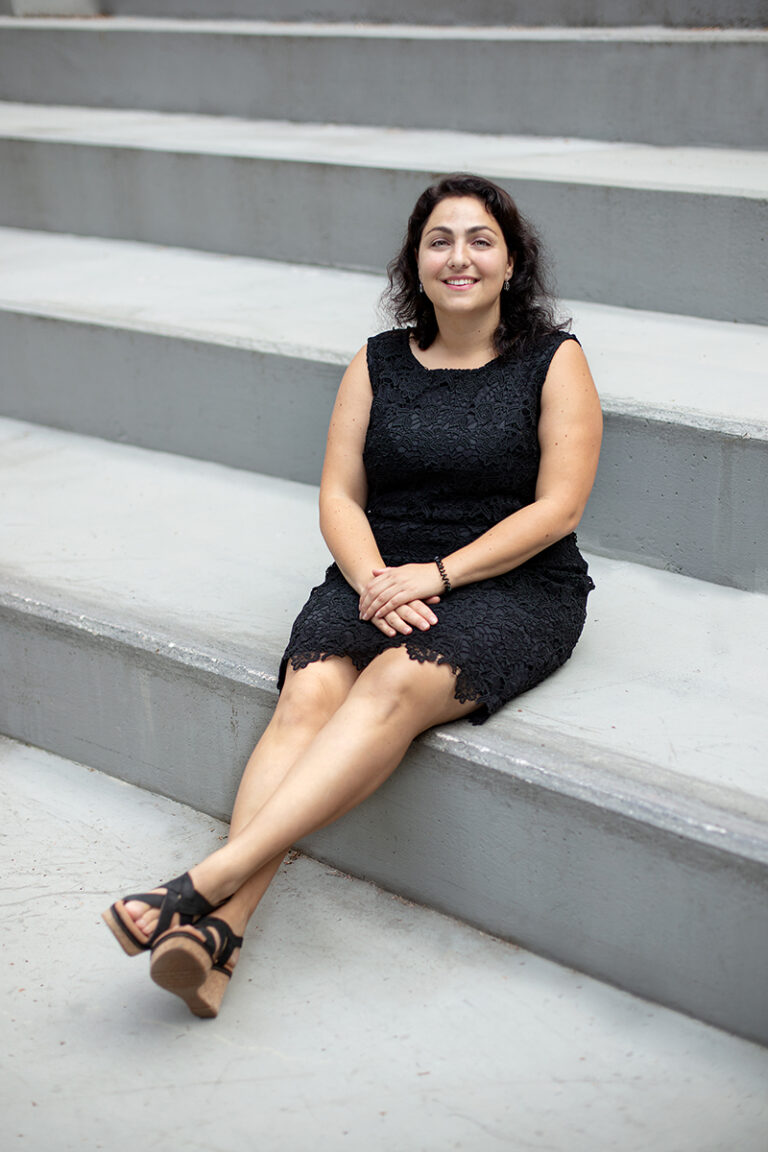
Alissa Hiegentlich (35)
2024 – now: Coordinator International Introduction Days, VU
2021 – now: International Student Advisor, VU
2018 – 2021: Hotel Manager, easyHotel 2014 – 2015: Master’s Entrepreneurship, VU/UvA
2009 – 2013: Bachelor’s International Business Administration, VU
What other challenges do international students face? “It varies a lot. Aside from the practical matters, moving to a new country alone to study is a big step. Many of them are truly on their own for the first time, without a network of friends and family around them. That can be lonely, and it helps to meet others who are in the same position. The educational culture is also different: international students are often very driven to achieve high marks. They sometimes struggle with the Dutch grading system – in the Netherlands, an 8 is considered a very good grade, whereas in many countries, getting a 10 is completely normal.”
Besides covering practical matters, what else is on the introductory programme? “We offer a crash course in Dutch, give them a campus tour, and introduce them to various organisations such as the Green Office and 3D. We also want them to get a feel for the city: we take them to the Rijksmuseum, do a scavenger hunt through Amsterdam, and there’s a day of sports and other activities at the VU Sports Centre at Uilenstede. We also organize an information fair – and we sell bikes.”
Bikes? “Yes, if you want to experience Amsterdam like a local, having a bike is really useful. We also pay attention to bike safety. Amsterdam is a busy city, and not everyone is used to cycling in such an environment. We try to emphasize, for example, that biking under the influence of alcohol is actually very dangerous.”
International Office
The International Office helps international students with their transition to life in the Netherlands. The introduction week for international master’s students, pre-master’s students, exchange students and participants in the Semester in Amsterdam programme runs from August 18 until August 26. In September, the International Office also organises the Jumpstart programme to help master’s students settle into their studies and life in Amsterdam.
Have you ever studied abroad yourself? “Yes, in South Africa. It was a wonderful time in which I learned a lot about life in another culture. I’ve always been interested in different cultures. I deliberately chose an English-taught bachelor’s degree because I wanted to meet students from all over the world. I still believe that international students enrich the university, despite the criticism internationalisation has received recently.”
That criticism has mainly been about the large numbers of international students. Do you think it’s justified? “I think it’s fair to adjust policies when things aren’t working well. There has been – and still is – a serious shortage of student housing or housing in general. It’s easy to blame the international students. Thankfully, last year and even more so this year we’ve been able to help a larger percentage of students find accommodation.
It’s good to take a critical look at yourself. Universities should do that as well and I believe they already do that when it comes to English-taught education. However, we should also consider the advantages of English-taught education. Academia is highly international, Amsterdam is an international city, and the companies where students will work are often international too. On top of that, much of the academic literature is in English. I think we have to accept that English is part of our society nowadays.”