


Are academics allowed to pursue their own curiosity and freely share their insights with students? Are they allowed to collaborate with colleagues from all over the world or are there restrictions on that?
The previous government sought advice from the KNAW on academic freedom, in other words the freedom to teach and research what you want. What is the situation regarding that freedom? What are the threats?
And the government had another question. What is the situation regarding freedom of speech in science? Do students and lecturers still dare to express their opinions?
Two questions, two reports, two conclusions. Politicians must enshrine academic freedom in law, the KNAW believes. And freedom of speech? Politicians should not interfere with that.
The lead author of the report on academic freedom is André Nollkaemper, professor of law. In daily practice, this freedom is not well protected, he believes, and that is partly due to the legislation.
The law merely states that academic freedom at higher education institutions “must be respected”, without making clear what that means. And the Constitution says nothing about it. That is very different from freedom of speech, he explains, which is explicitly protected by the Constitution and European treaties. Freedom of speech is therefore better protected.
Why does academic freedom suddenly need legal protection now,
and not in the past?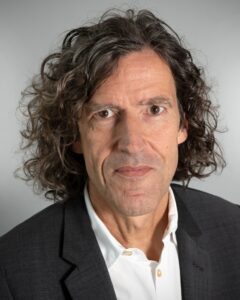
Nollkaemper: “European comparisons show that the situation in the Netherlands is now quite worrying. There is limited room for independent research. We also see that some researchers have to deal with hate campaigns. Moreover, the political landscape in Europe and the United States is a warning sign. We now have a better understanding of how important academic freedom is and also what happens when political majorities shift. That is why we must think about this: have we safeguarded it properly? We don’t think so.”
Do you also foresee problems for academic freedom in Dutch politics?
“Proposed legislation on knowledge security would have imposed significant restrictions. The government wanted to screen students and researchers before they were allowed to come here. The proposed legislation on internationalisation and the language of instruction would also have restricted the freedom of educational institutions, but those legislative proposals have been shelved for now.”
What do you expect legal protection for academic freedom to achieve? Will it also lead to court cases?
“There is indeed a risk that more people will start to invoke their academic freedom, but that is the price you pay for legal protection. I don’t have a crystal ball, but there might be a court case if a university board prevents a researcher from collaborating with the fossil fuel industry or a Chinese university. Or perhaps someone wants to teach about a controversial theory, for example in the field of climate or migration. In Ghent, an academic recently came under fire for writing about racial differences in intelligence: such issues could lead to a lawsuit about academic freedom.”
Should it then be left to the courts to determine the limits of this freedom?
“It does not always have to lead to a lawsuit. We can discuss these questions amongst ourselves at an early stage: what falls under academic freedom and what are the limitations? For example, you can’t just teach about anything, because students are following a specific programme and that is structured in a certain way.”
Our academic freedom can clash with that of others. If you collaborate with Israel or China, for example, what about the academic freedom of Palestinians or Uyghurs?
“Ultimately, each case must be assessed individually. Research may have nothing to do with oppression in itself, but the closer the connection, the stronger the grounds may be for deciding against collaboration. That is up to the academic community.”
The increasing dependence on private-sector clients is also a threat to academic freedom, according to you. That will probably not change with new legislation.
“If funding for science declines, the pressure to secure external funding increases and that is a risk: you are then less able to choose your own research topic. Researchers must then safeguard research integrity. How do you make the results public? You are not a passive victim: you have an active role to play. But it does become harder as the scope for independent research narrows.”
The Ministry of Defence is now making money available for research and innovation, and universities are seizing the opportunity. Are they giving up their academic freedom in the process?
“Extra money is not in itself a threat to academic freedom. It therefore depends on how the collaboration is organised. In all cases, the freedom of academics must be safeguarded. They can certainly formulate a research question jointly with the Ministry of Defence, but how are they going to carry out their research? That should be up to the academics. And how transparent can they be? They must also have the space to say no.”
Perhaps they think in government: he who pays the piper calls the tune.
“Then I hope that these reports will give cause for reflection. Scientific research must be free, so the person who pays should not be the one determining the content. The reports do indeed come at a critical moment, also for science itself. Academic freedom comes with a responsibility to safeguard it.”
You might think: be careful what you wish for. Could a legal definition of academic freedom become a stick to beat academics with when they discuss something outside their field of expertise on a talk show?
“You should not view it too narrowly. What is someone’s expertise? Doing research often means that you do not know all the answers yet. Moreover, academics are trained to approach problems from an academic perspective. That perspective also allows them to comment on fields other than their own.”
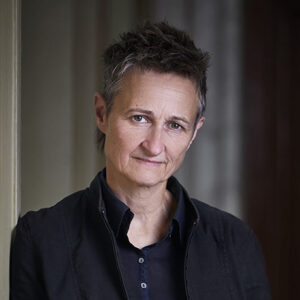
The KNAW is also publishing a report on freedom of speech in higher education and research. The government should interfere as little as possible, says lead author Ineke Sluiter, former KNAW president and professor of Greek language and literature.
Freedom of speech is part of a free society. Is that not actually self-evident?
Sluiter: “We could certainly have wrapped things up quickly, but freedom of speech always raises questions. This is not the first report on it and it will not be the last.”
Why shouldn’t politicians interfere with it?
 “Freedom of speech is very well protected in the Constitution, other legislation and also in the European Convention on Human Rights. And academics have a code of conduct that requires them to be as transparent as possible about their role in public debates. That is sufficient. If you start to further define freedom of speech with new rules, you are actually restricting it.”
What can politicians actually do then?
“That is the problem: politicians want to do something. They often react to incidents and want to be seen as taking decisive action. But restraint also requires a certain courage. When it comes to incidents at universities, they should say more often: this is not for us to decide.”
The controversy inside and outside the university is often about sensitive issues, such as collaboration with countries like China and Israel. This report surely will not put an end to that controversy?
“No, but ideally, freedom of speech ensures that you can have a real debate about such issues with the academic community and participatory bodies. Just like politicians, university administrators must also adopt a restrained approach in this regard and, in any case, communicate transparently. You will never achieve unanimity, but after a debate, you do know which proposals have support.”
In the report, you explain to students that the lecture hall is a ‘brave space’. What is that?
“In the lecture hall, you may sometimes hear theories you find objectionable, and that is part of the experience: students are learning and encountering subjects and viewpoints that are new to them. If there is no room for that in education, where else would there be? Students must respect each other’s space and viewpoints. Most can live with that perfectly well. That actually applies to all the points we mention: the vast majority of things go well. Almost all debates and lectures take place without any problems.”
Yet emotions sometimes run high, for example when it comes to slavery or climate change. Is that a problem?
“No, you study those subjects precisely because they are sensitive. Research almost always involves a degree of personal commitment. People often think that this only applies to the social sciences, but if you study biodiversity, for example, it is also because you recognise its value. In education and research, of course, you must make sure that your emotions do not dictate your analyses.”