
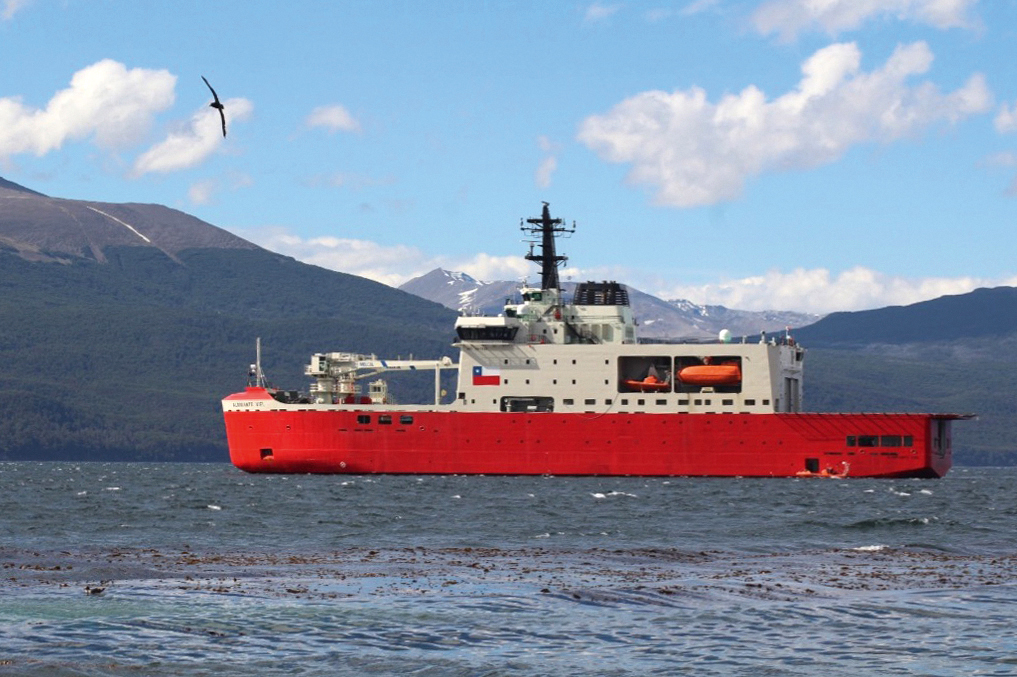
It all started in Punta Arenas, the link between the inhabited world and Antarctica. Setting up a camp in Antarctica is a logistical challenge. There has to be enough food, drink and equipment on hand, and nothing should be forgotten. In the days leading up to our departure, we loaded all our belongings onto a shipping container. This involved two tonnes of tents, fresh and freeze-dried food, fieldwork equipment and many more essential items. The container was loaded onto an icebreaker owned by the Chilean navy, a ship that would be sailing us over the notorious Drake Passage over the next few days.
The journey took us past the fjords and glaciers of Patagonia to Cape Horn, where South America ends and the open sea begins. From here, we took three days to cross the Drake Passage with high winds and waves. Along the way, we spotted whales, petrels, albatrosses, sea lions and more. Even out on the open ocean, you can see plenty of birds: from the tiny storm petrel to the giant albatross, which has the largest wingspan in the world.
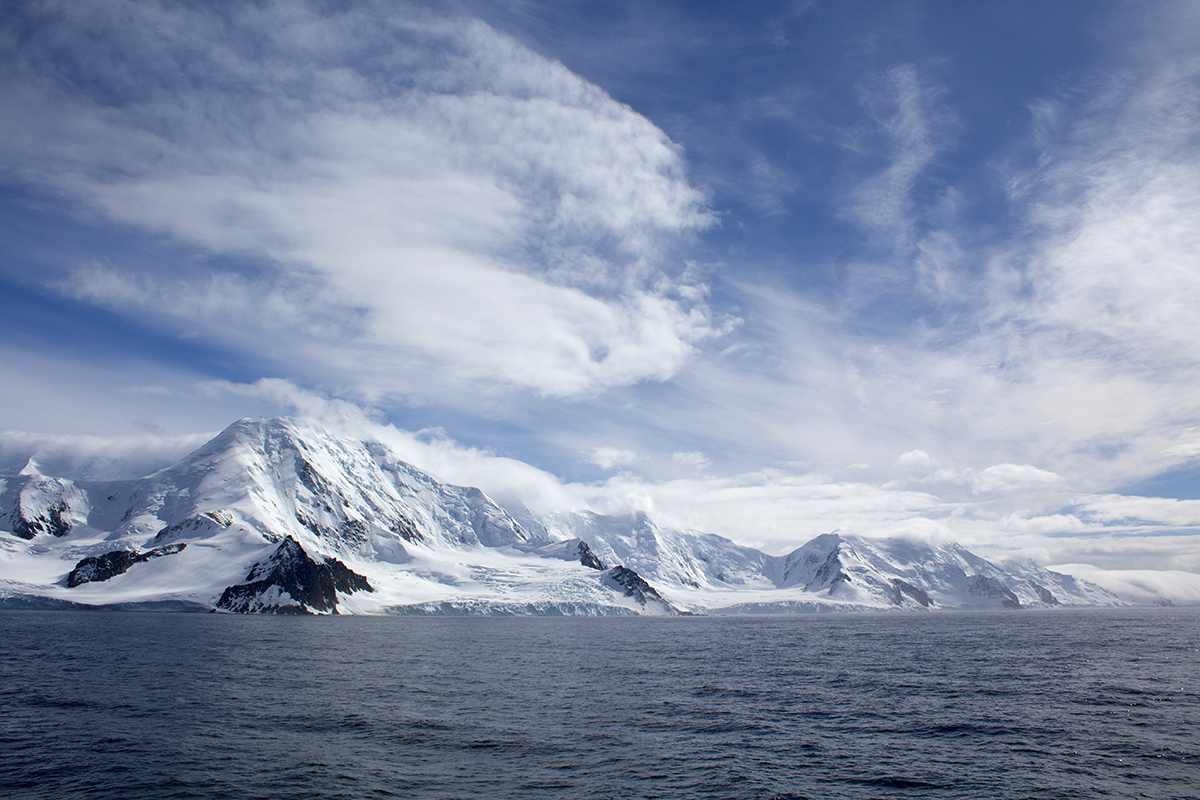
In the middle of the night we left the open sea and entered the Antarctic region via the Nelson Strait. It was a breathtaking experience to wake up surrounded by the floating islands of ice and gigantic glaciers. We were the last to be dropped off at Harmony Point, which gave us the opportunity to sail along the West Antarctic peninsula, several South Shetland islands and finally, Nelson Island.
Usually, people and goods are transported ashore by rubber dinghy, but Harmony Point beach is rocky and there are frequent high waves. For this reason, our belongings were transported by helicopter to the campsite, and we were brought to a beach further along by rubber dinghy. This was where we were greeted by a large group of penguins, seals and elephant seals.
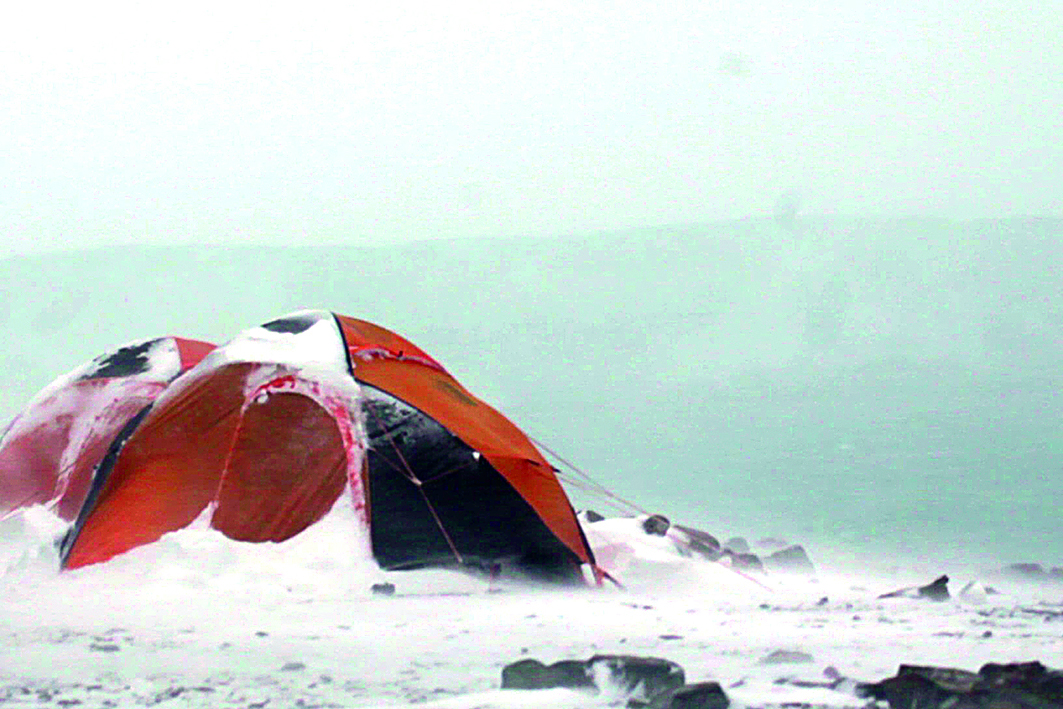
It was incredibly special to be back at this place again, and it felt a little like coming home. Nelson Island is almost entirely covered by a glacier, but Harmony Point is a small headland lying on the southern tip of the island where, in summer, fields of moss and lichen appear and rocky beaches provide the perfect breeding ground for Antarctic seabirds. A little piece of land is accessible to a small group of researchers within this special protected area, where access is restricted. Here we set up camp with a tent for the kitchen, a separate tent for sleeping, and a makeshift lab for processing samples.
From inside the tent, I looked out over a colony of giant petrels, with a bay beyond which penguins and seals were swimming, and beyond that, the Nelson Glacier. On the other side lay a large open field covered in moss and lichen, where Antarctic skuas build their nests. Further along in the ocean, large groups of whales could regularly be seen, creating glistening fountains of water. On calm days, you could hear the calls of the gentoo and chinstrap penguins tending to their young further down the colony.
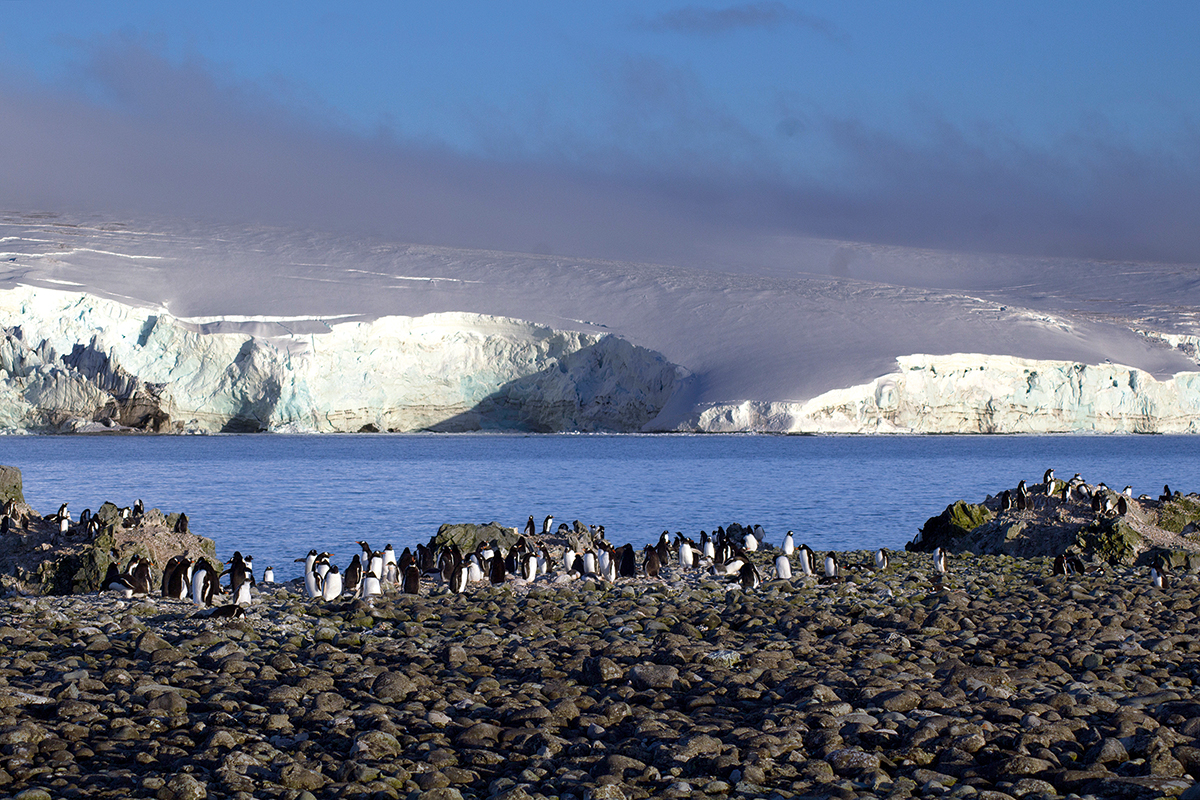
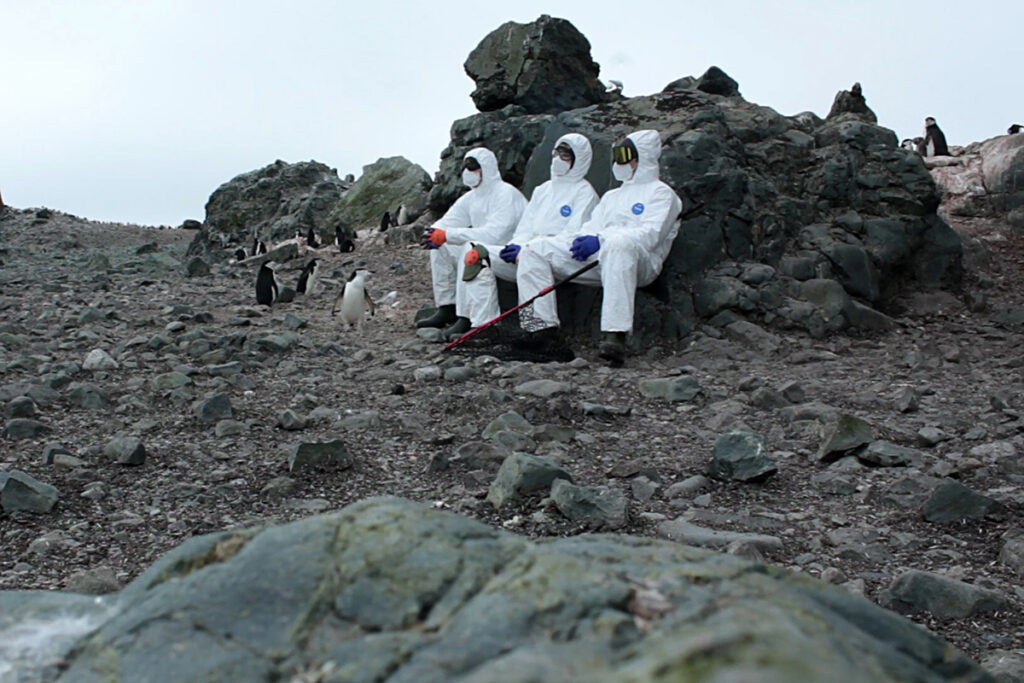
Our work consisted of catching penguins and other seabirds in order to fit GPS trackers and take samples for research into conditions such as bird flu, the microbiome and pollutants. We also installed cameras, giving us impressive images of penguins swimming together with whales. We also monitored the breeding process, from the laying of an egg right up until the chick left the nest. Two months of living in this wilderness teaches you a great deal, and you see differences that someone based at a research station wouldn’t notice. It’s so special to see how caring penguin parents look after their young, and how quickly these little woolly balls grow into adult penguins. You can’t help but empathise with these animals.
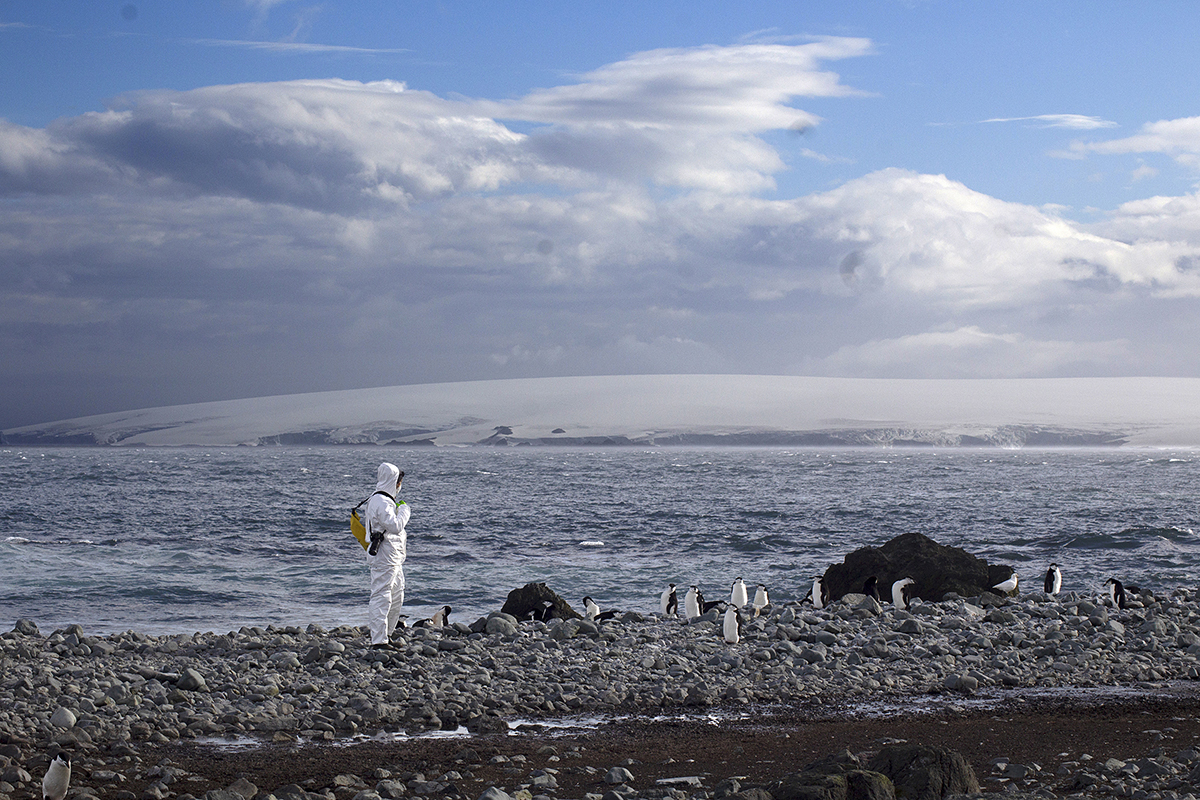
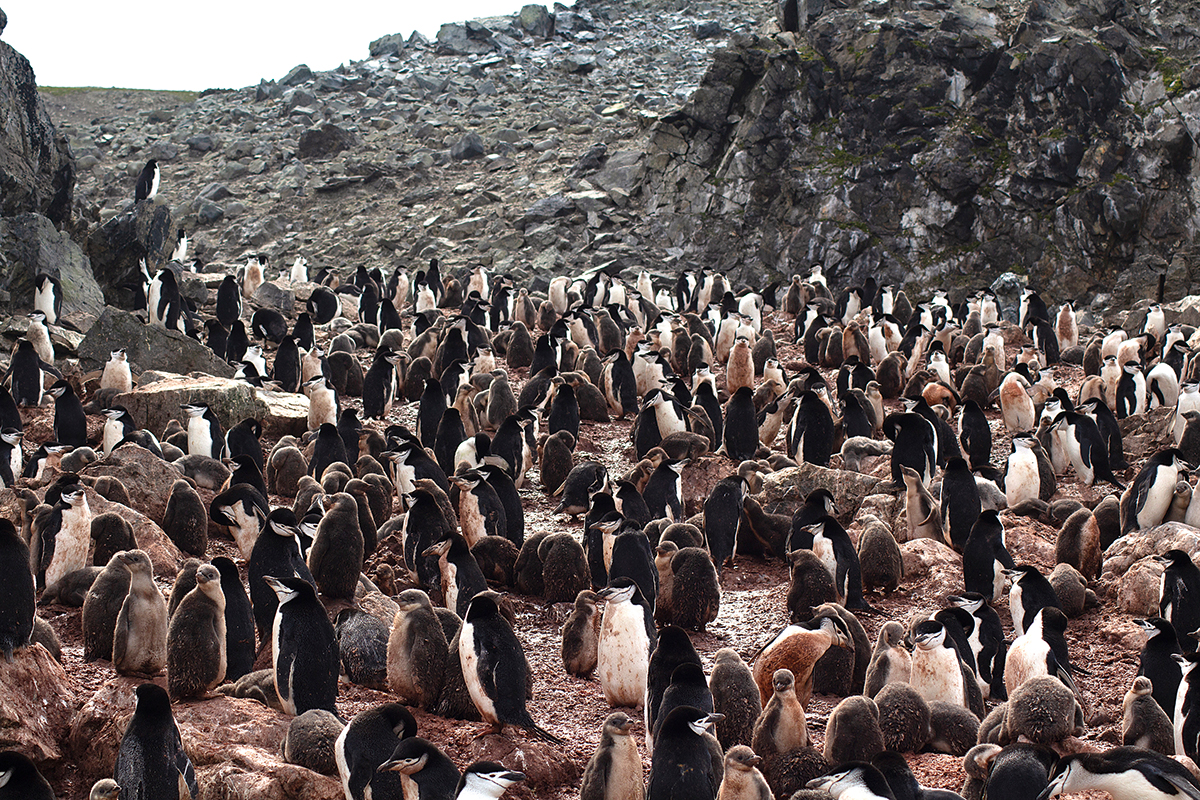
Other highlights included young male elephant seals playing together, to practise for when they reach adulthood, and how, during penguin adolescence, a nursery group forms with dozens of chicks gathered together and only a few adults. Penguins and other animals often came up to the tent out of curiosity.
Although you are in an area that is highly protected from humans, there are sadly signs of the impact that humans have had on this far-flung ecosystem. Rubbish washes up on the beach, mainly plastic and materials used in fishing. Huge buoys can be found in the middle of the penguin colonies, and poorly maintained structures on the island are beginning to collapse and are scattered everywhere. We also kept finding dead birds that had succumbed to bird flu brought here by humans. The damage is already plain to see, and we have to take a very strong stance on the exploitation of this vulnerable continent, especially the alarming impact of tourism and krill fishing.
Following two successful, wonderful yet demanding months, it was time to pack up camp. We were collected by helicopter to head to the Chilean base of Escudero by ship, and from there, to fly back to Punta Arenas.
I’m grateful for the opportunity to be part of such an amazing, important project, and that I was able to experience such a unique place. At the same time, I saw how even here, at the end of the world, human activity is causing damage. I hope that this area stays preserved, despite it all.